
From Over-Functioning to Mostly Managed
Feb 04, 2026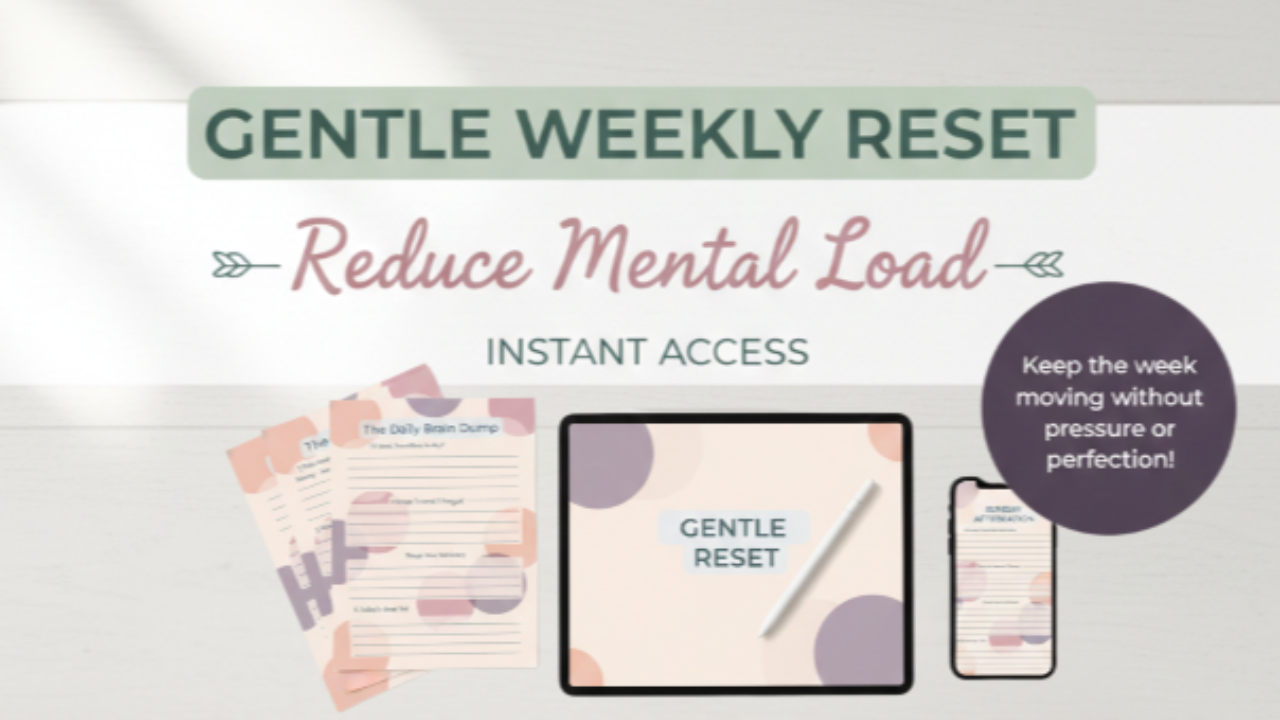
There was a season of my life where I truly believed that if everything fell apart, it would be because I didn’t do enough.
So I did more.
I remembered everything.
I anticipated everyone’s needs.
I solved problems before they were spoken out loud.
I stayed one step ahead of the chaos—at least on the outside.
And from the outside, it looked like I had it together.
But inside? I was exhausted.
This post isn’t about “fixing” you.
It’s about gently naming what’s happening—and offering a way forward that doesn’t require you to become a whole new person.
What Over-Functioning Really Looks Like (And Why It Feels So Heavy)
Over-functioning isn’t just “doing a lot.”
It’s:
-
Being the default reminder system for everyone in the house
-
Carrying the mental load of schedules, meals, emotions, and logistics
-
Feeling like if you drop the ball, everything will unravel
-
Anticipating needs before anyone else even realizes they exist
You’re not controlling.
You’re not dramatic.
You’re not bad at delegating.
You’re compensating—often because you’ve had to.
Especially if you’re a mom without a village, or the most capable person in the room, or the one who keeps things moving when others can’t… over-functioning becomes a survival skill.
It works.
Until it doesn’t.
The Quiet Cost of Being “The Capable One”
Here’s the part we don’t talk about enough.
When you over-function long enough:
-
You stop trusting anyone else to step in
-
You feel resentful—but also guilty for feeling resentful
-
Rest feels unsafe, not refreshing
-
You’re constantly “on,” even when you’re sitting down
And eventually, even simple things feel heavy.
Not because you’re lazy.
But because your nervous system is tired of being the backup generator for the entire household.
Why “Doing Less” Isn’t the Answer
If you’ve ever been told:
-
“Just lower your expectations”
-
“You need better boundaries”
-
“Stop doing everything for everyone”
…and felt immediately misunderstood—that makes sense.
Because when your life actually requires you to show up consistently, “doing less” can feel irresponsible, not freeing.
What you don’t need is less care.
You need less constant carrying.
This is where the shift happens.
From Over-Functioning to Mostly Managed
“Mostly managed” does not mean:
-
Perfect routines
-
Silent mornings
-
Kids who never forget anything
-
A life that runs without you
Mostly managed means:
-
You are no longer holding everything in your head
-
Systems do some of the work with you
-
You’re responding instead of constantly anticipating
-
When something slips, it doesn’t send you into a spiral
It’s not about control.
It’s about support.
And the support starts small.
The Real Shift: Externalizing the Mental Load
One of the biggest changes I made wasn’t doing less—it was storing less in my brain.
Instead of:
-
Remembering everything
-
Repeating the same reminders
-
Re-deciding the same things every week
I started asking:
“What can live outside of me?”
That looked like:
-
Simple visual routines instead of verbal reminders
-
Weekly resets instead of daily panic
-
Planning that supported my actual capacity
Not rigid systems.
Not aesthetic perfection.
Just enough structure to breathe again.
Why Weekly Resets Matter (Especially When You’re Tired)
Here’s what I’ve learned the hard way:
If you don’t pause on purpose, life will keep demanding on autopilot.
A gentle weekly reset isn’t about getting ahead of everything.
It’s about giving your nervous system a chance to exhale.
To say:
-
“This is what matters this week.”
-
“This is what can wait.”
-
“This is what I’m not carrying alone anymore.”
Even 15–20 minutes can shift how the entire week feels.
What to Try This Week (No Overhaul Required)
If you’re feeling stretched thin, try one of these—just one:
-
Write down everything that’s looping in your head and close the notebook
-
Choose one routine that feels heavy and simplify it by one step
-
Decide your top three priorities for the week and ignore the rest
-
Name where you’re over-functioning—and where you could add support
This isn’t about catching up.
It’s about coming back to yourself.
A Gentle Support If You Want It
If you’re craving a soft place to land each week, this is exactly why I created the Gentle Weekly Reset.
It’s not a productivity system.
It’s not a planner that expects more from you.
It’s a calm, repeatable way to:
-
Clear the mental clutter
-
Set realistic priorities
-
Re-enter the week feeling grounded instead of braced
No pressure.
No perfection.
Just support.
(You can find the Gentle Weekly Reset here when you’re ready.)
You’re Not Failing—You’re Carrying Too Much
If you’re over-functioning, it’s not because you’re broken.
It’s because you care deeply.
Because you’ve learned how to hold things together.
Because you’ve been strong for a long time.
Mostly managed doesn’t take that strength away.
It gives it somewhere safer to rest.
And if today all you do is recognize that you don’t have to do everything alone—
that’s already a meaningful shift.
I’m right here with you. 💛
SUBSCRIBE FOR WEEKLY LIFE LESSONS
because every mom deserves a little extra magic in her inbox! ✨
We hate SPAM. We will never sell your information, for any reason.
